Are you a current or former student looking for a letter of recommendation? Please be sure to request one at least 6 weeks before the due date and send me all relevant materials about the program to which you are applying.
If you are a current or former student interested in having me advise your thesis, exam committee, or dissertation, please reach out to schedule time to speak with me in-person.
I am also happy to speak about career opportunities both in academia and outside of academia, particularly in fields such as publishing and foreign policy-related careers.
Please know that I care about your wellbeing and want you to have the academic and emotional support you need to succeed on your academic journey. Feel free to reach out to me with any questions, and take advantage of support groups offered by UM and in Washtenaw County, including NAMI Washtenaw’s Campuses in Color.
Course Descriptions
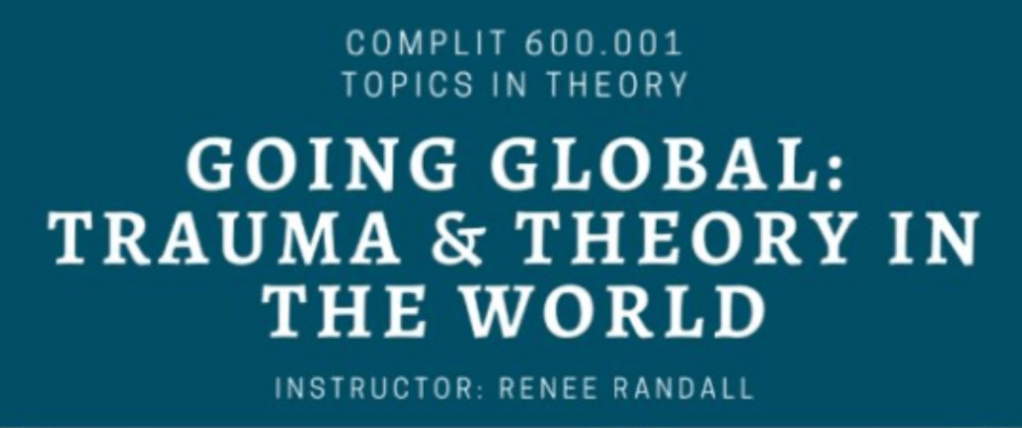
Comparative Literature (CL) 600: CL600 is a seminar-style course for first-year doctoral students in the department of Comparative Literature and related fields. It is designed to help introduce students to theory through the lens of the instructor’s areas of interest and expertise. As such it is not a comprehensive study of all theories, everywhere–rather, it is a targeted and methodological introduction to thinking with theory as guided by a practical application. This course explores the intellectual and historical trajectories in the globalizing field of trauma studies as a means through which to understand what theory does (and what it doesn’t do), how it carves out a place for itself in academic and popular discourses, and how we might best make use of it. By the end of the semester, students will feel more comfortable reading and engaging with theoretical texts; understand the trajectory of trauma studies and its real-world impacts; and develop a strong writing voice when engaging with theory and literature.
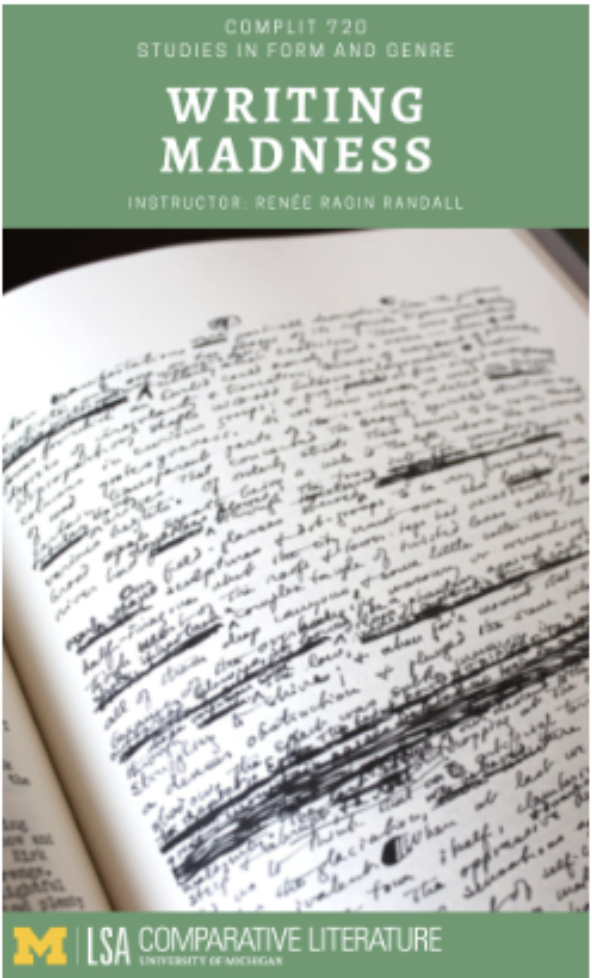
Comparative Literature 720: There is a saying in Arabic, al-junun funun, which roughly translates to: “madness takes many
forms.” In this class, we consider some of these forms in both their content and their representational aesthetics. It is a class focused on narratives of madness which we will explore through literary texts (novels, short stories, memoirs, plays, song lyrics, and religious texts), memoir, audiovisual media (film and music video) as well as literary criticism and theory. Our approach to the topic will chart paradigms such as: voicing/hearing madness; madness and gender; colonial madness; literary madness as sociopolitical critique; spiritualism; and the anti-psychiatry and mad studies movements. Expect to see some writers you know (Shakespeare, Edgar Allen Poe, Foucault, Dostoevsky and Kanye… yeah, we’re going there) as well as ones that may be new for you (Akwaeke Emezi, Roxane Gay, Antonia Hylton, Junot Díaz).

